

When should you choose aluminum EMT instead of rigid conduit? Aluminum EMT can be the better fit more often than people expect, especially when the install has to move quickly and the environment still demands materials that hold up. If EMT is on the table, PullEase™ EMT from American Conduit gives you a practical option that’s designed with pulling efficiency in mind, which matters on projects where time is never unlimited. These are some of the scenarios where EMT makes a great deal of sense.
You’re Moving Fast and Efficiency Actually Matters
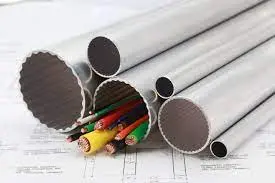
When speed matters, EMT usually enters the conversation for a reason. It’s commonly used for interior runs where you need a clean, consistent pathway without overbuilding the system. Rigid conduit has its place, but it can slow the process in spaces where heavy protection isn’t the main concern. Aluminum EMT can help crews stay productive, especially in large buildings where the number of runs multiplies quickly.
PullEase™ EMT from American Conduit fits this scenario well because smoother pulling can take friction out of the day. On a big install, you’re trying to finish runs on schedule without turning every pull into a fight that wears down crews and burns hours.
You’re Working in Areas That Aren’t Gentle, But They Aren’t Extreme Either
Rigid conduit often makes sense when conditions are truly punishing, like high impact areas, exposed outdoor runs with heavy abuse risk, or places where maximum protection is the priority. But many projects sit in the middle. Think mechanical rooms, back-of-house corridors, warehouses, parking structures, and service spaces where humidity and exposure exist, but you still need a practical installation approach.
Aluminum EMT can be a smart choice in those in-between environments. Aluminum’s corrosion resistance in many conditions can help when you’re worried about long-term deterioration, but you don’t necessarily need the heft of rigid. You still have to match the conduit to the actual exposure and code requirements, but EMT isn’t automatically a lightweight option in the way people sometimes assume. It can be a thoughtful decision for spaces that demand durability without demanding the most extreme protection package.
You’re Trying to Reduce Labor Without Cutting Corners
Rigid conduit can require more time, more effort, and in many cases more labor planning, especially when the route is long and congested. EMT can simplify the workflow, particularly for typical interior distribution where you’re supporting lighting, branch circuits, and common facility loads. That’s why EMT often shows up in builds where efficiency is part of the budget strategy.
Choosing PullEase™ EMT can support that goal because pulling becomes a smoother step in the sequence. If you’ve been on a project where the wire pull becomes the bottleneck, you know how quickly momentum dies. When that step goes better, everything behind it gets easier, too, including terminations, testing, and turnover.
You’re Building With Future Changes in Mind
A lot of facilities are never really done. Retail spaces get remodeled, warehouses add automation, data centers expand, and industrial buildings evolve with new equipment. In these environments, the conduit system has to support change. Aluminum EMT can be a good fit because it supports efficient installation now and can make future work less painful when new circuits need to be pulled or routing needs to be adjusted.
Hopefully, we’ve answered the question, “When should I choose aluminum EMT instead of rigid conduit?” If you have any other conduit-related questions, please don’t hesitate to use our online contact form or call American Conduit at 1-800-334-6825.