

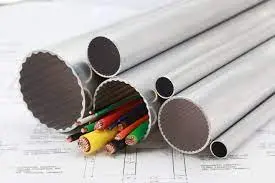
At American Conduit, we carry several standard sizes for aluminum EMT conduit. We’ll work with you to ensure you have the perfect size for your specific application. Choosing the perfect size is especially critical for applications involving data centers. When you’re routing network, control, and low-voltage power to rows of cabinets, the right conduit choice makes life easier today and six upgrades from now.
That’s why so many teams lean on our PullEase™ EMT. It’s smooth, consistent and built for fast pulls in high-density environments where schedule and precision both matter. Here’s some information on making sure you have the right size for your specific needs.
Start With the Architecture, Not a Table
Before you touch a fill chart, map your architecture. Are you running home-runs to every cabinet or consolidating in overhead zones and stubbing down? Do your fiber trunks and copper bundles share paths, or do they split early for separation and serviceability? When you anchor the conduit plan to the topology – hot aisle/cold aisle layout, MDA to HDA paths, and cabinet counts – you’ll land on sizes that reflect real cable volumes rather than generic assumptions. PullEase™ EMT from American Conduit slots neatly into these strategic routes, keeping your backbone clean and predictable.
Bend Radius, Path Length, and Real Pull Tension
Cable isn’t theoretical – it has bend radius limits, memory and weight. If your path snakes around structural steel, you’ll fight every degree of bend. Keep bends shallow and spaced, and shorten runs with strategic pull points. Where you can’t avoid distance, bump the size. A step from 1 inch to 1-1/4 inch PullEase™ EMT can drop tension dramatically, reducing the risk of jacket scuffing or connector damage at the end of a long day.
Separate by Function and Future
Data centers evolve. Give different signal classes their own raceways and size them independently. Fiber deserves generous room because trunk counts tend to swell during migrations. Copper bundles for management networks, BMS, or access control benefit from slightly oversized PullEase™ EMT so you can swing in spare pairs later without opening ceilings or disrupting the floor.
Coordinate With Trays and Supports
Conduit rarely works alone. If trays carry the main trunks, PullEase™ EMT becomes the disciplined, protected path for cabinet drops, cross-connects and branch circuits. Match sizes to tray exit densities: if 20 cabinets share a zone, using 1-1/4 inch for common drops may keep you from crowding the last few pulls. Don’t forget support spacing and seismic requirements; tight spacing stiffens the system and can make smaller sizes feel cramped during pulls, another reason to err on the larger side in complex spans.
Thermal, Bonding and EMI Considerations
Even low-voltage conductors generate heat in tightly packed spaces. Extra air in the raceway helps with dissipation and keeps effective ampacity in a safe zone. Metallic raceways also serve as shielding and bonding paths; maintaining continuous, low-impedance connections matters for signal integrity and safety. PullEase™ EMT delivers a consistent fit with couplings and connectors, which supports reliable bonding and minimizes surprises during inspections.
Think in Phases, Buy in Standards
When you plan phases, leave capped stubs or spare runs sized for what’s actually likely to change, not just what you hope won’t. PullEase™ EMT makes those future adds straightforward because the geometry and finish are consistent lot to lot, so accessory fit and pull behavior stay predictable.
Find out more about our standard sizes for aluminum EMT conduit by calling American Conduit at 1-800-334-6825 or using our online contact form.